Beyond the AI Hype: What the Reflection 70B Controversy Teaches Us About Enterprise Automation
Exploring the Reflection 70B controversy and why "Human-in-the-Loop" workflows are essential for reliable enterprise AI automation.


A few weeks ago, the tech world was captivated by a viral post from OthersideAI CEO Matt Shumer. His bold claim? AI had evolved to the point where he was no longer needed for technical work. He stated he could simply prompt an AI, walk away for four hours, and return to flawlessly executed, error-free code.
Shortly after, he announced "Reflection 70B," aggressively hyping it as the world's most powerful open-source AI model. The model supposedly utilized "reflection tuning" to recognize and correct its own mistakes before providing a final answer.
Beyond the AI Hype: Lessons from Reflection 70B
The Reality of "Weaponized Hype"
Independent evaluators quickly discovered that Reflection 70B completely failed to meet its promised benchmarks. Users testing the API even found evidence that it was sometimes just calling Anthropic's Claude 3.5 Sonnet, meaning the "revolutionary" model appeared to be little more than a wrapper.
The controversy escalated when the model's creator failed to provide reproducible benchmarks or transparent training details. This kind of opacity is a red flag for enterprise adoption. When you're building mission-critical automation for regulated industries, you need verifiable performance metrics and clear documentation of model capabilities and limitations.
As AI expert Gary Marcus rightly pointed out, narratives claiming AI can independently execute complex, multi-hour tasks without error are just "weaponized hype". These claims ignore the daily reality of hallucinations and reasoning errors that proper AI infrastructure must account for.
The lesson? Extraordinary claims require extraordinary evidence. Before deploying any AI solution in production, demand concrete proof of performance in scenarios that mirror your actual business conditions, not cherry-picked demo use cases.
The Danger of Unchecked LLMs in Business
This controversy highlights my core philosophy: You cannot rely on unchecked, raw LLMs for real business operations. In regulated environments like Healthcare, precision and auditability are non-negotiable. You cannot afford for an autonomous agent to silently fail or hallucinate a patient's insurance eligibility.
Consider a real-world scenario: An LLM-powered agent is tasked with verifying insurance benefits for a patient undergoing a major surgery. If the model hallucinates coverage details or misinterprets policy language, the consequences cascade, incorrect billing, delayed procedures, potential harm to patient care, and massive compliance violations.
This is why I architect systems with multiple layers of validation:
Deterministic checks that verify AI outputs against known rules and thresholds
Human review queues for edge cases that fall outside confidence thresholds
Audit trails that document every decision the AI makes for regulatory compliance
Rollback mechanisms to quickly revert problematic automation without disrupting operations
The Future is "Human-in-the-Loop" Workflows
True AI infrastructure requires combining Hard Engineering (like NestJS, Python, and Docker) with Process Automation (like n8n and RPA). It's about building intelligent workflows that catch complex edge cases rather than failing silently.
For example, in Automated Insurance Benefits Verification systems, AI handles the heavy lifting of browser automation, but built-in exception handling routes complex cases to a human reviewer queue. This is how you scale without sacrificing trust.
The technical stack for such systems typically includes:
Robust orchestration engines (n8n, Temporal) that manage workflow state and handle retries
Containerized AI services (Docker/Kubernetes) for consistent, scalable deployments
Structured logging and observability (OpenTelemetry, DataDog) to track every decision
Queue-based architectures (RabbitMQ, Redis) to decouple AI processing from critical business logic
Key Takeaways
AI hype often masks significant performance gaps and hidden dependencies
Unchecked LLMs are unsuitable for high-stakes business operations in regulated sectors
True AI infrastructure requires Hard Engineering + Process Automation
Human-in-the-loop workflows prevent silent failures and ensure system trust
Frequently Asked Questions
This approach has proven successful in real-world deployments across healthcare, finance, and manufacturing sectors, where the cost of AI failure far exceeds the investment in proper infrastructure.
Stay Updated
Get the latest insights on AI automation, voice agents, and production-grade systems delivered to your inbox.
Related Posts
Why I Stopped Building "Websites" and Started Building "Workforces"
For years, I proudly wore the title of Full-Stack Developer. But I realized the code I write shouldn't just display information - it should actually do the work alongside humans.
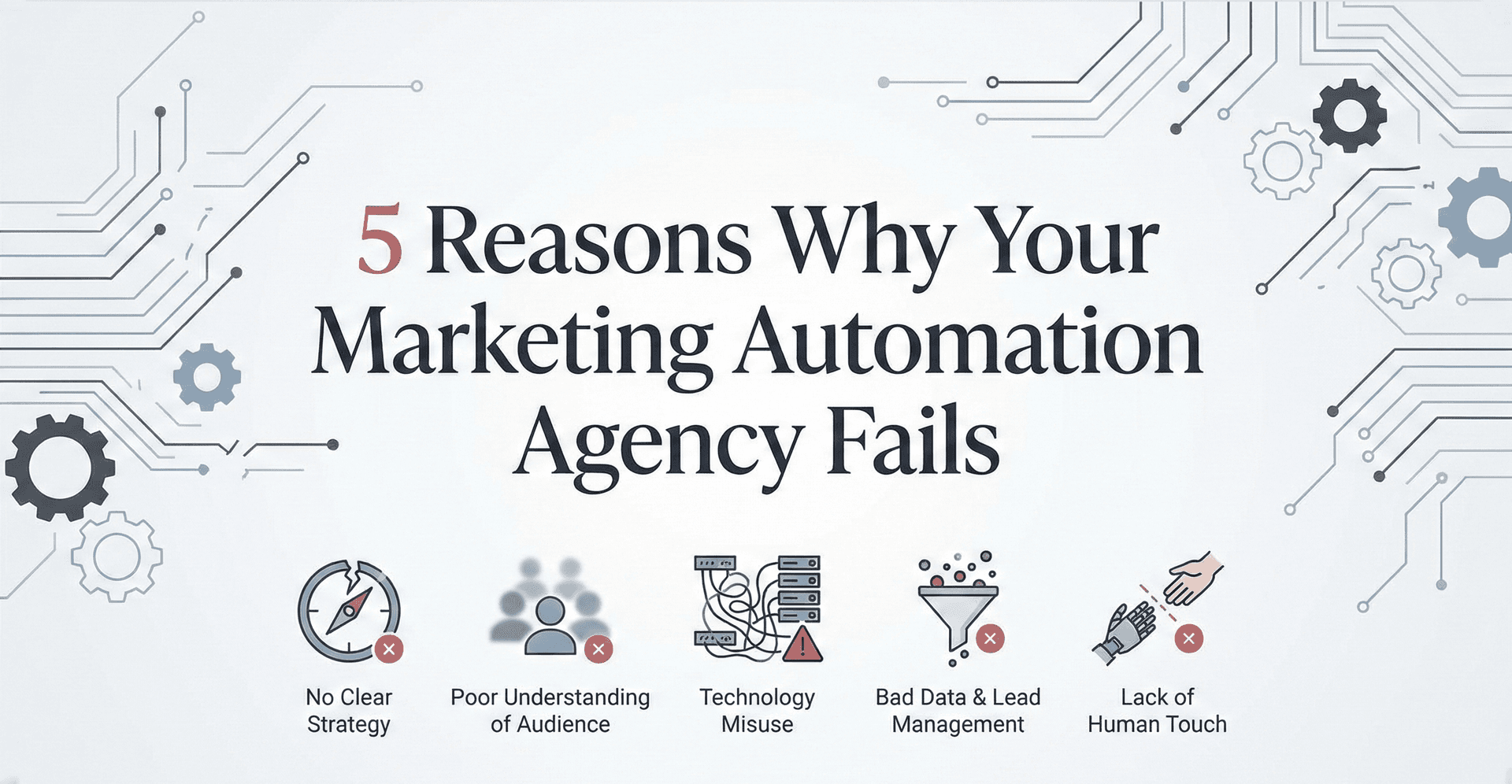
5 Reasons Why Your Marketing Automation Agency Fails
Learn why your marketing automation agency might be failing and how to fix strategy, data, and support issues to transform your results and maximize ROI today.
Join the Discussion
Found this article helpful? Share your thoughts, ask questions, or start a conversation with the community on social media.